The art of layering light
· 6 min read
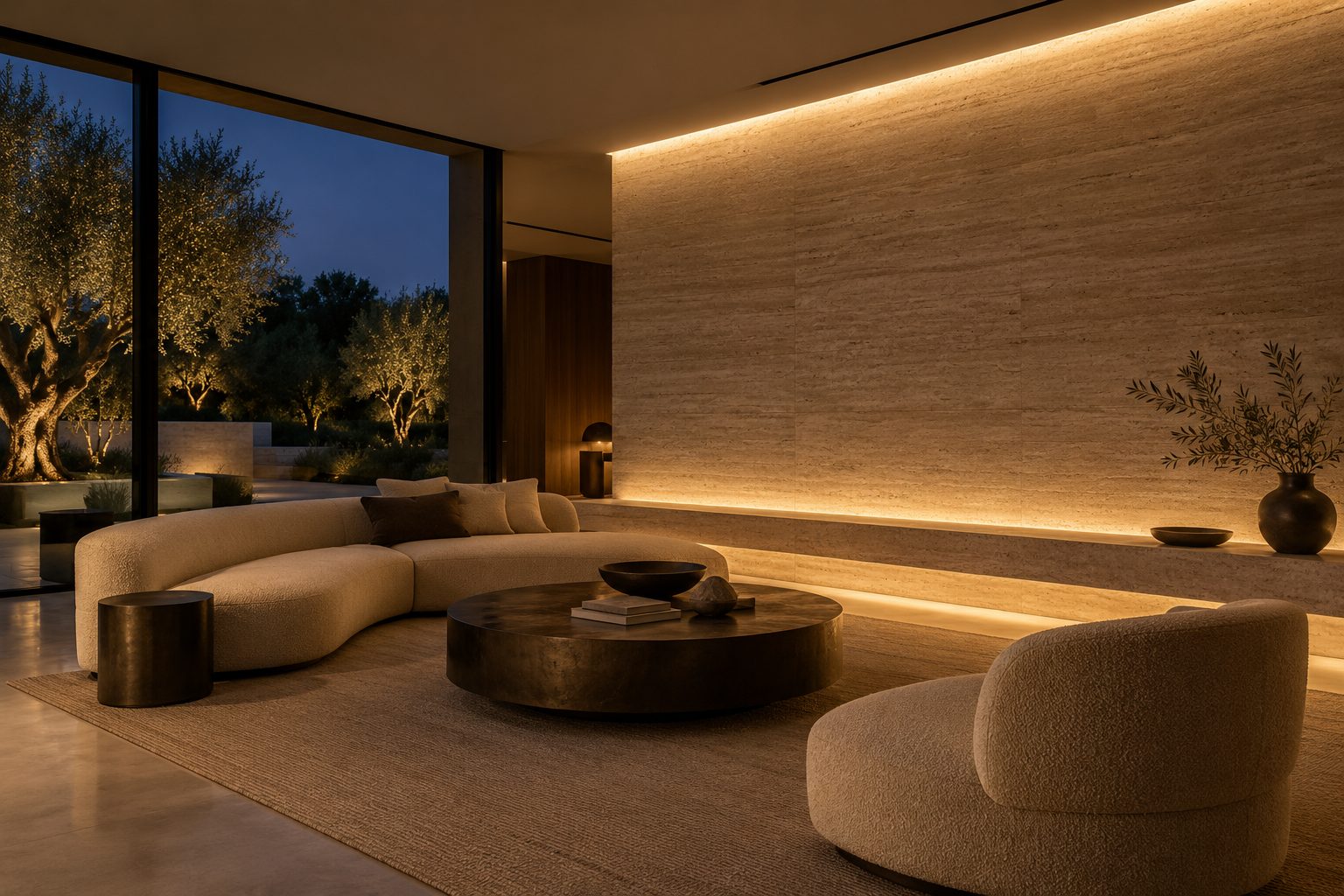
Walk into a room lit by a single ceiling fitting and it feels flat, however beautiful the furniture. Walk into the same room lit in layers and it feels finished. Layering is the simplest idea in lighting design, and the one most often skipped.
Layer one: ambient
Ambient light is the base level that lets you move around safely and lets your eyes settle. It should be soft and even, and it rarely needs to come from overhead. A wash on a wall or a line of light in a ceiling cove fills a room far more gently than a downlight grid.
Aim for light you notice only when it is switched off.
Layer two: task
Task light goes where you read, cook, work and eat. It is brighter and more directional: a pool from a downlight on the worktop, a suspended linear over the dining table, a reading light beside the sofa.
Good task light comes from slightly in front of you and to the side, so your head and hands do not cast shadows on what you are doing.
Layer three: accent
Accent light gives a room its character. It picks out a painting, grazes a stone wall or lights a tree outside the window so the glass does not turn into a black mirror at night.
As a guide, an accent should be around three times brighter than its surroundings to read as intentional.
Putting it together
Put each layer on its own circuit or dimming channel. In the morning you might want only task light in the kitchen; in the evening, a low ambient wash and two accents. The fixtures stay the same; the room changes completely.
If you are planning a project, our team can help you map the three layers onto your floor plan before a single cable is laid.